Posts

Time to get writing

Image
 So I'm doing a lot of teaching this time of the year, and there is Christmas t enjoy. And I need to produce a few new lectures. But I have also set myself a deadline for a seminar at the beginning of February and I need to write a good part of my chapters on experiencing gameworlds. On small problem here is that I need a lot of writing on the materiality/production of games tjat leads up to this - but for reasons I have decided to have a seminar on that part of my text in May.  I really need to test ut my most important ideas about phenomenology and games from the start. If that part is understandable and good then I can work out the rest from there. Christmas is (almost) over, or at least it's Monday, and i was going to start writing and I had nothing to say. So I sat down to read Sokolowskis Introduction to phenomenology some more and I was back in the flow of thinking about games. There are som many ways of disseminating the experience of being in another world ta get from...

Phenomenology

Image
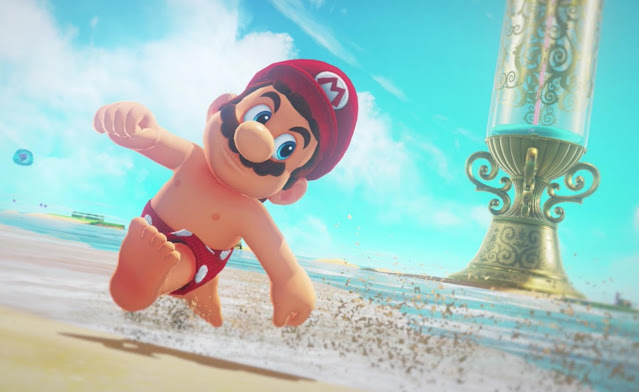
After Reading a lot of Harden, who is great at writing about games and gameworld from a player and developer point of view, I decided to read some basic phenomenology. And In Hardens introduction he recommended Robert Sokolowskis Introduction to Phenomenology. So I've been reading that too and it is a great tool; I'm starting to get a grasp of what I can and can't do with phenomenology and it's clear to me that as a method it is what I need but at the same time it's just the beginning of an interpretive process.  It has given me a clear perspective on one aspect of my two chosen games right from the start; Zelda BotW is an open world and the gameworld seems limitless, it spreads out en embraces me as a player inviting me to walk or ride long distances. In Mario Odyssey each little part of the world is clearly limited like a small intricate construction (a building, a cabinet, a piece of jewelry?). Mario Odyssey is a large world too - but in a very different way. I...

A Day of Reading

Image
Very soon I will begin a very busy couple of weeks teaching Art History. But today I had an opportunity to spend some time reading Matthew Gladden's Phenomenology of the Gameworld and it is a very rewarding read. I'm not going to review it here, I will need to work may way through it and use what I find i writing instead. But I was struck by one early thought. A lot of writing on games describes them as stories or journeys, and a journey in a game is usually a story along a distance of gameworld paths. Gladden makes this a lot more complicated an interesting by talking about this from the standpoint of both game developer and game player. And he writes that the understanding of a complex combination of a lot of different parts of a game's construction and the perception of it distills down to one smooth easily graspable picture (p. 34). And that's where I begin, and where my thinking about gameworlds differ from almost all the writers I've read this far. I see a pi...

What games?

Image
 Had a good talk with my colleague and supervisor about my plans for my thesis, and we made a tight schedule to get things going. And he came with some good input, and most important was that I need to decide what my empirical material will be, and to do that fast. So what games do I want to write about and how should I think about these choices? I have a short-list of possible games, but it's too varied in many ways. Some are on consoles, others on computers, some are old other are new. And I realised that I will need to write about my chosen games a lot. It's not a good idea to compare and talk about many different games all through the text. So right now my list is The Legend of Zelda: Breath of the Wild and Super Mario Odyssey . Two recent and very well received mainstream Nintendo games. One open-world exploration, the other level-based and almost linear but full of references to various types of gameplay, very meta at times. Two games aimed at kids but with a large adult...

An outline

Image
 So I had to make an outline for my thesis and send to my supervisor, who also is my colleague, and I might just as well put it here too. So I can go back and compare to what it became when done. That is to say, this is all very much a preliminary outline. 1.       Frontmatter: a.        Introduction b.        Goals and aim c.        Previous research d.        Theory e.        Method f.         Limitations 2.        Thesis: a.        Games as technical images i.       Perspective   and 3d rendering ii.       Procedural   images iii.       Game   production iv.       Flusser’s   technical images b.        To be in the gameworld i.       Experiencing   vs. playing ii.      ...

Hardware

Image
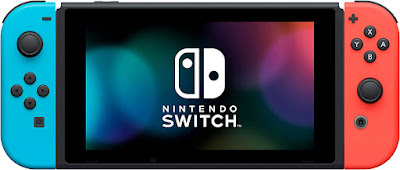
I got some new hardware, and it's pretty much focused on Nintendo. And thats because Nintendo makes the kind of games I enjoy (Zelda, Mario). So at home I have a Wii U and a Switch, and at my office I have a Switch and a PS3. I also play on my iPhone, iPad and Mac. But no PS5, no Xbox and no gaming PC (so none of the major platforms). This might be a problem and then I might have to get some more hardware, but I'm planning to compensate that with Twitch. Twitch is a livestreaming platform for (mostly) gamers playing game and talking. It makes it really easy to see games in action, and by not playing myself I can see more and take notes although I miss some central aspects of gaming itself. I'm a viewer and not a player.  I am thinking about this now; I do not plan to write about playing but about being in the game world. There is a difference. But perhaps I need to play more varied games. On the other hand I feel very little difference considering the "being-in-the-gam...

Finding sources and reading them

Image
I did the most simple thing yesterday, I entered "Game World Phenomenology" first into Google and then into LUBsearch (the search engine of my university library in Lund). Google had one interesting hit; there is a book about game design with the title Phenomenology of the Gameworld: A Philosophical Toolbox for Video Game Developers by Matthew E. Gladden. Not available at any libraries I have access to, so I have ordered it from a bookstore. Not really sure it will be all that useful, since I already am reading and using Salen & Zimmermans Rules of play : game design fundamentals which seems to be one of the most quoted books on game design fundamentals. Google also had a few other hits I will look into, mostly on methodology of game studies. LUBsearch on the other hand provided more interesting results, but many of them have a heavy sociological focus and that is far outside the scope of my reading/writing. But I have a few articles at hand in Zotero for reading later...

Baby steps

Image
 Today I had some spare time from other obligations so I could do some thinking and reading. Even with just an hour to spare I read and sorted som essays on Atmospheres edited by Tonino Griffero. There i found a few good notations on the historical development of atmospheres as a subject within phenomenology as well as notes on when the term gets useful in writing. I also found a few essays in the collection that I really don't need to read; after a few pages it was clear to me that I had no use for them. That too is work. I also read the introduction and a few short chapters in Monroe C. Beardsley's Aesthetics  and while I will read more there I think it's way to much philosophy to be useful for anything but background knowledge. There's really not a lot of time in this process for deep background reading. I also spent ca 15 minutes playing Grand Theft Auto III (Rockstar, 2001), remembering what a joy that game is. Driving around in a small low-res city and listening ...

What am I writing about?

Image
 There is a pleasure in being in a game world, an escapist pleasure of being somewhere else, in a more interesting world where you have more agency and more capabilities. This pleasure is not new, nor specific to games, on the contrary most art has this potential for escapism; paintings, novels, theatre, opera and cinema have all been mediaforms where other worlds have been crafted. Games have one more thing than the predecessors; games are interactive and can at times provide a very open structure for how to perceive oneself to be inside these other worlds. A painted world is static but lets the viewer wander over it's surface. A narrative story is linear and we must walk through it on the path given by it's creator. Games can be very open and allow for many different paths through a world, and the gamer has agency in it.  So I will look at the effect of being in the game world with a phenomenological eye and comparing it to ways of being in worlds made through painting, scen...

30 years later; A New Start

Image
 This is an experiment, it may not last.  In 1993 I was accepted as a PhD student at the department of Art History, I had an idea about Digital Aesthetics that I proposed as the subject of my thesis. My point then was that I somehow could see and describe new forms of artistic production inside the then very speedily evolving world of computer graphics and online technology. But I also got very much involved in teaching Art History so the thesis remained half-written and I gave up on the project. There where more stuff happening in my life at the time, and I was not the best prepared PhD-student. Instead I became an adjunct and teacher at my department. A few years back I wrote a short article in an anthology on Nature that we all at the (now) division of Art History worked with. It was a very enjoyable writing process and I restarted my thesis project again. And then Covid hit and everything was turned up-side down again for almost two years. At the end of that period I had...