Posts

Showing posts with the label writing

Done

Image
 I have now completed the writing and editing of my dissertation; it was time to draw the line. In principle, one could continue working endlessly, but at some point, you must conclude. Now, the focus shifts to the administrative aspects of the defense process: organizing the language review, a final proofread, ensuring the dissertation is printed, and arranging the event itself. I have an opponent confirmed and two out of three members for the examination committee, so things are coming together!

The end is near

Image
Editing and revising my manuscript has been both challenging and incredibly rewarding. This stage of writing is by far my favorite, it's where the text really comes to life, the ideas are refined, and the argument becomes clearer. With less than two weeks to go, I’m happy to be on schedule! Once I’ve completed this stage, the manuscript is sent to a professional proofreader to make sure the language, English is not my first language, is polished and accurate. Along the way, I’ve made some difficult decisions. I cut three short chapters based on critical feedback, but was able to integrate some of the key points elsewhere in the text.  I also picked up a few technical skills and mastered Word’s cross-referencing function! I also added more pictures and incorporated them into the text. The goal of 180 pages has now grown to over 200 pages. I think that’s the right length: substantial, but not unwieldy. It’s exciting to see it all come together, and I can’t wait for the next steps: mo...

At the Threshold

Image
I am approaching an important milestone on the way to my defense and completing my dissertation. In six days, I will hold my final seminar, where a competent reviewer will go through my text and provide a public critique. This serves as a kind of dress rehearsal for the actual defense. I have a reliable reader, so I feel relatively confident. However, the goal of the seminar is to identify issues that can be addressed before everything is finalized. In addition to my main reader, I also have a professional philosopher reviewing the sections of my dissertation that deal with phenomenology, ensuring I receive solid criticism from that perspective as well. These past few days, I’ve been reading through my manuscript from beginning to end. I’m finding numerous errors—typos, changes that weren’t made correctly, missing images and illustrations—small things that can be fixed. But larger concerns about the overall structure and my reasoning trouble me more. For instance, I discuss a specific ...

A complete draft of my thesis is done!

Image
 I just sent off a complete 1:st version of my thesis for my final seminar on October 2. I have written at least a first draft of each chapter and I have all the screenshots of the games I need. That's actually only 4 days after my intended deadline (and I did send out a version without the discussion , conclusion and usability parts in time!). To get the images, I played for 8 hours straight yesterday. It was not as easy to play for that long as it used to be, but I had fun. I am not going to post this draft here, it's just for the seminar.

Now I have all the time in the world to edit, rewrite and write

Image
 The editing has begun, I have spent most of the day getting started. My work consists of five parts, the first is the obligatory preamble (method and theory and stuff), the second is about images, the third about experience and the fourth about time and space in games, the last is end stuff (conclusion, bibliography etc). Today I've revised the introductions to parts two and three (part four is next) to remove a lot of superfluous stuff that just makes everything more confusing. So not only have I revised a few pages and finished two introductions, I've also clearly delineated what will be cut from the rest of the manuscript over the next few weeks. Great start. I've seen that Riven is getting a remake. If it comes to the Nintendo Switch, I'll play it again, because I really liked it the first time.

100 days of editing

Image
Now there is a date for my final seminar, October 2, and a reader. So I just set a day to send him my manuscript and it gives me 100 days to finish writing and editing my book. I think that's doable.

Talking about my work with my supervisor today

Image
 Today it was time to report to my doctoral supervisor Max. He asked me to summarize the three main parts of my text, and we talked about them and some more specific problems in some chapters, as well as writing techniques. All in all, it was a very good conversation. I wish I'd had more time to revise now, especially since I'd taken the whole Easter week off to do it, but unfortunately I was tired for a few days so I didn't really rewrite much. But I did have time to read my text and think about its structure and how to get a better flow in the argument. And this check-in was a continuation of that, so I'm hoping to get back on track with rewriting. We're also planning the date and opponent for my final seminar in the fall, so the goal is getting a little closer. I'm pretty sure I'll have to spend a lot of the summer rewriting, but that's to be expected.

Back to writing, and editing

Image
 So I took a break for a while because I had to teach art history full time. But now I'm back on the dissertation track, and I'am currently reading my manuscript (most of it is actually written now) and planning some thorough revisions. Before I started rereading it, I thought it was all awful and useless. Such thoughts are common for anyone who really needs to sriously. But on re-reading, I found that my ideas were good and interesting enough. However, they are somewhat disorganized and need to be reworked to make my arguments clearer and hopefully stronger. There is also a lot of feedback to take into consideration. That's what I need to do this spring, you better work .

Time goes by so slowly

Image
Some writing fatigue. After many months of writing and editing, I'm in a bit of a dip. I'm reading a lot and looking at my manuscript, but writing very little at the moment. I'm not panicking, I'm on schedule, so I'm really in no rush. It might even be good to slow down for a few weeks.

Flow and Wölfflin

Image
 The seminar with the musicologists went very well, it's good to get perspectives from outside. I was warned about some dichotomies in my text (which I had taken from the literature I had read), which was actually much less binary and more on a scale, so I was able to adjust that. Some of my concerns about the descriptions of music and sounds were brushed aside, they work well here. And some of the discussion ran down rabbit holes beyond what I will be writing about. But even that made me realise one thing: the two games I chose are special; they're examples of exceptional game design with an emphasis on world-building, and not all games are, and not all players play those kinds of games. The types I'm avoiding here, namely FPS and indie games with artistic aspirations, were more popular with some participants. I have to mention that in my introduction. Another outcome of the discussion with Max was that I read Merleau-Ponty's Phenomenology of Perception with regard to...

Game engines, sound, music

Image
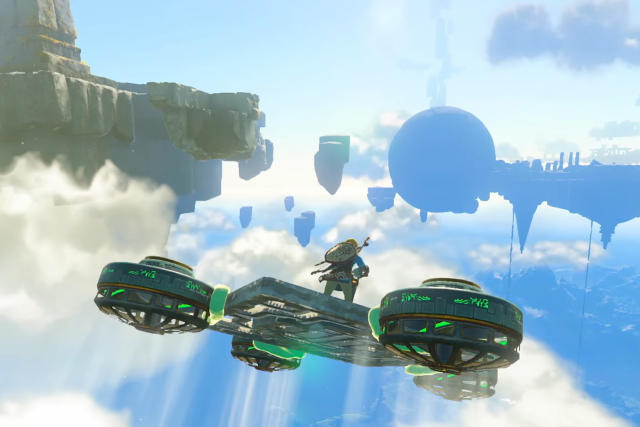
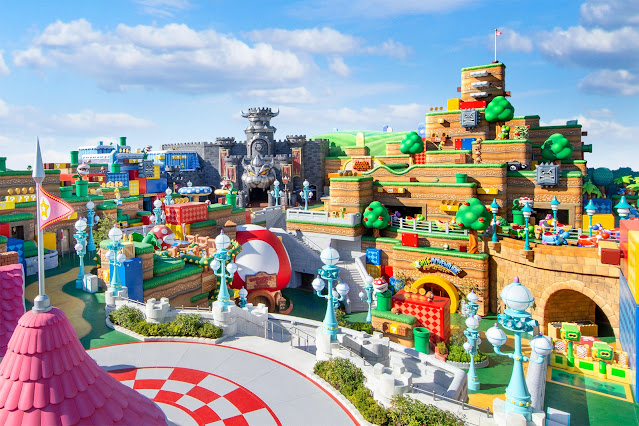
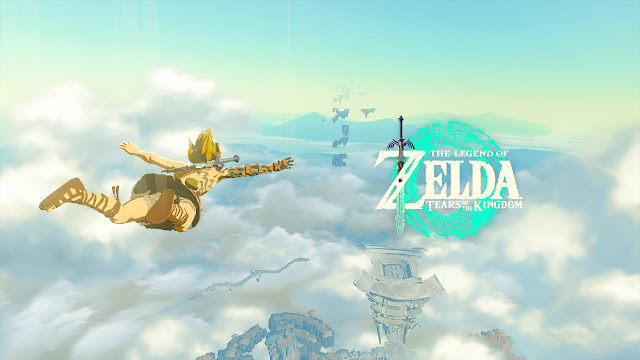
 This week I did a lot of reading and wrote some important parts. I wrote more thorough descriptions of the gameplay in Breath of the Wild and Super Mario Odyssey for my introduction, since that was one of the things my reader wanted in the Gothenburg seminar. I started with the chapter on sound and music in games, and it's fascinating. There's so much technology in the texts I've read, and I can fit so little of it into my text, that I had to make a note telling myself to write only what was related to my main themes of experiencing the gaming world and not digress. I got a number of books from the library and use some of them to support arguments in what I have already written. Jesper Juul's "Half-real: video games between real rules and fictional worlds" was a great read, but it seems like everywhere I use it I have to argue against him. Well, I suppose it's good for me to do something different than well-known ludologists (he argues that he's no...

A good day

Image
 Today was a great day for writing, I got so much done and it's still not over. Right now I'm figuring out how to get the part on phenomenology in shape so I can ask my supervisor to read it. I'll probably save the part on atmospheres for later, but the rest should be done shortly. Then it's time to get into sound and music and immersion. And I really need to get started on the part on narration. There's so much to do, but I have the map and I know roughly where I want to go. It's fun. I think I'm still on schedule with my writing, but there's still a lot to do. I hope to have many more days like this one. Being old and having worked as an art history teacher for many years, I have some insight into the work process. When I was accepted as a graduate student, I shared a computer with other students in my department. Books had to be checked out through the university library, and most of the time they had to get them for me from other libraries. Journal a...

A week of homework

Image
 This week there's major maintenance on the rail line I usually ride to work, so I've decided to stay home and write instead. It's a bit of a retreat, although I do enjoy going to Lund and meeting people. Now I wake up, have breakfast, go to my desk and start working. It's been a long time since I've talked to anyone about how I write, so I'll share it here. I've a clear outline in Scrivener so I can see where I need to write. Right now it's the middle part of my thesis, which is about phenomenology and how you think about experiences with art and games. Some days I can just sit down and write, other days I've to do a lot of reading. A day of reading is usually followed by a day of writing, frantically backtracking my reading, checking sources to make sure I understand them, and adding proper footnotes. I usually need breaks to eat lunch, take a walk, or go to the gym. A normal day would include both. And in the evenings, when I'm too tired to wr...

Editing days

Image
 Day after day I edit texts that I have already written. It takes so long, mainly because I have to add many perspectives. I am glad that most of the time I can remember where the ideas came from and that I have the books in my library at home. I spent some time today reading parts from these books while editing: Gombrich, EH,  Art and illusion: a study in the psychology of pictorial representation .6. ed, London, Phaidon Press, 2002. Flusser, V,  En filosofi för fotografin .trans. Jan-Erik Lundström, Göteborg, Korpen, 1988. Flusser, V,  Into the universe of technical images .Electronic Mediations, Minneapolis, University of Minnesota Press, 2011. Bolter, JD, & R Grusin,  Remediation : understanding new media .Cambridge, Mass., MIT Press, 1999. Good thing is that it all gets better, and it comes together. I'm feeling fine about this book.

Stress and writing

Image
I've been writing, mostly technical stuff about how games work. I have an interesting problem, which is how to explain games to art historians and the art historical theory of visuality to gamers without boring them. Anyway, it feels like I'm writing and writing and doing nothing. I'm still mostly concerned with phenomenology and haven't yet connected it to everything else, except for some thoughts on perception and perspective. I've read a lot of books and thought a lot about play worlds, visual storytelling, and image experiences, but it's hard to connect them. I did a very rough revision of parts of my text, including some hastily compiled texts that I sent to a national seminar for doctoral students in art history to read aloud in early October. I didn't put much effort into making the revision a coherent text, because that would be a big waste of time. I have 101 days left to write, and I still think it will work. But sometimes I feel the stress of ...

This is it

Image
Summer vacation is over and now the really intense writing semester begins. In 129 days I should have a manuscript ready for a final seminar. If the seminar goes well, it will be on to the final adjustment and production of the book and for the dissertation. I am very much looking forward to this and have started the work by doing a lot of reading. Mostly Martin Kemp's The Science of Art , but also some phenomenology and Jason Schreier's Blood, Sweat and Pixels on game development processes. I plan to spend this week reading (there's a two-day kick-off event at work that I also have to attend) and next week going over what I have written so far. Then there will be new material again. Almost everything I read, or at least everything I notice about what I read, makes a connection that makes these game worlds more understandable, it's like I am seeing little pieces of a bigger picture but can not yet grasp it all. About a week ago I came up with a good title for the book,...

Summer is coming!

Image
 So I had my seminar, with a short text (9 pages) on the technical side of images; from renaissance perspective to film editing to interactivity in games; my three main stations. It was about creating three-dimensional worlds where the viewer wants to be present in one way or another, and trying to sort out all the different technical aspects that have been taken from whence into the visual machine that is games. It's a bit complicated to write a text that should be understandable to both gamers and art historians without being too basic for either of them. Hopefully I will be able to write something that makes the field a little more understandable for both. The seminar went very well, with lots of good feedback, from details to inconsistencies that found their way into the text. For some reason, I do not always manage to maintain a stable terminology, so now I need to revise the manuscript to use player, gamer, and viewer in a coherent way. Anyway, I am ready to keep writing beca...

My seminar went great, I'm writing another game-text

Image
Two things happened. 1. my seminar with my art history colleagues here in Lund has taken place. It was good, and I got some valuable ideas to work on. The schedule is getting a little tight here; I need to use the input and work on a completely different part of my text for a seminar in May. And during that time I will be on two field trips, first to Berlin and then to France, which has nothing to do with my work. But I'll get it done, because I have to have it done before the writing semester starts in the fall. 2. We had a two-day writing retreat in Båstad in my department, not to work on our own stuff, but to write texts for an anthology on "art and response" I am not sure if I should participate (due to time constraints), but I have 1500 words as the beginning of an essay on perception and bodily response to playing Mario Kart, so I probably will. I need a little more time to write, and I still need to read up a bit on the response side of my thesis here, but that...

Preparing textseminar #1

Image
 Back to writing and editing! In a week I will present something written for the first time in a seminar at my faculty. So I am working on the text I have written so far to make it better and more readable. A colleague gave me a tip about Instatext ( https://instatext.io/ ) and I think it is a very useful tool to improve my written language skills. It's not possible to integrate it with Scrivener, and it's not very good at handling footnotes - but it's good for editing my text. I also need to read some phenomenological readings to show where I am going, so a first pass with two scenes, one from Zelda and one from Mario, and three basic structures of phenomenology from Sokolowski's Introduction to Phenomenology. Every time I feel lost or do not know what to do next, I sit down and read something by Sokolowski or Gladden for an hour, and then my mind starts working again. They are very good books that make me think in the direction I want.